The TP-Link BE10000 review centers on a two-unit Wi-Fi 7 mesh system designed for broad coverage, multi-gig networking, and busy connected homes.
Its tri-band design and flexible ports offer room to build a capable home network, though the benefits depend on your internet plan, devices, layout, and placement.
Deco 7 Pro Review Summary
The quick verdict
600+ ratings
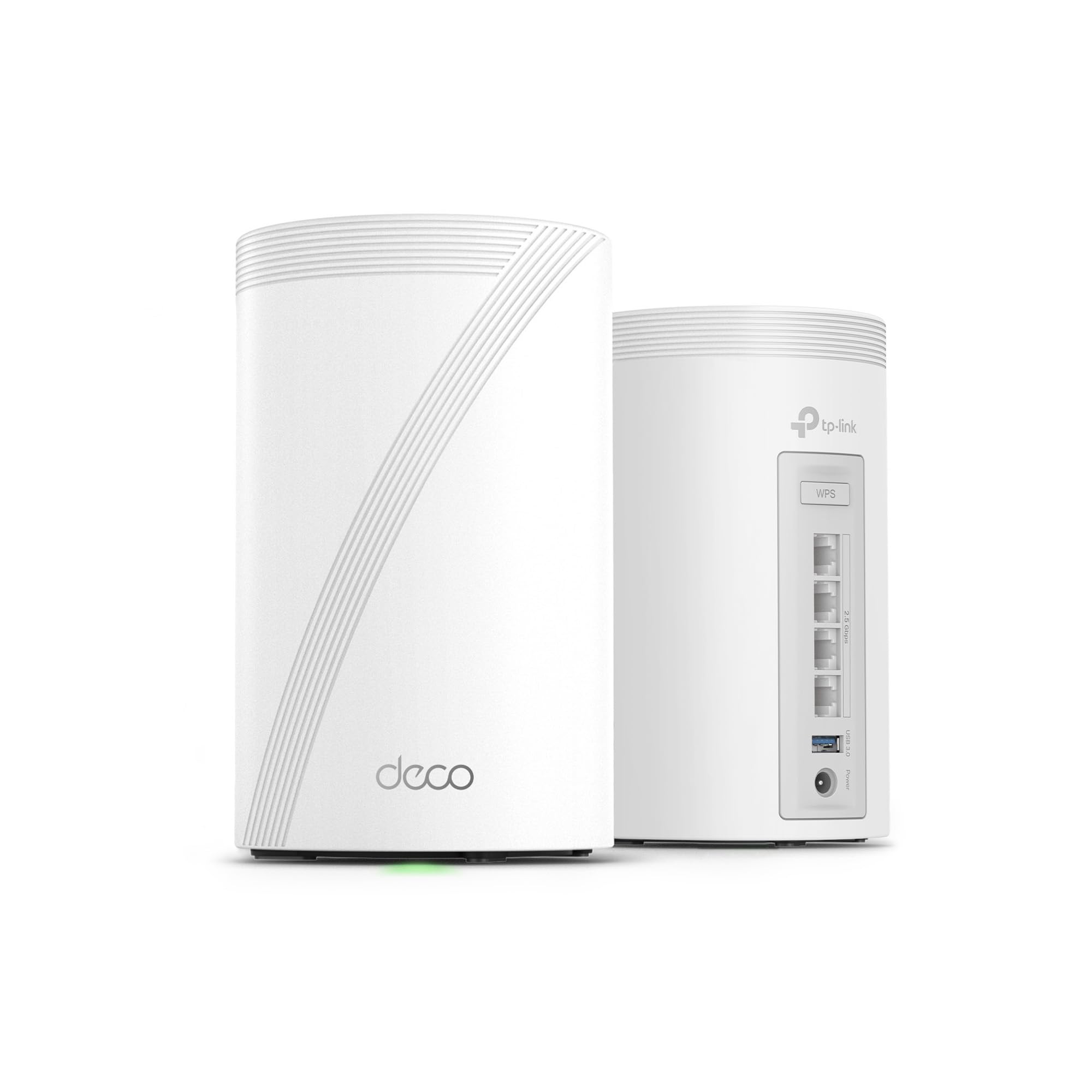
Read Amazon ReviewsTP-Link Deco 7 Pro BE63
A two-unit Wi-Fi 7 mesh system for larger homes, multi-gig wired setups, and households with many connected devices.
- Two-unit tri-band Wi-Fi 7 mesh system with combined BE10000 class branding.
- Listed maximum wireless rates are up to 5,188 Mbps on 6 GHz, 4,324 Mbps on 5 GHz, and 574 Mbps on 2.4 GHz.
- Coverage is specified at up to 5,800 square feet for the two-pack, with support for more than 200 devices.
- Four 2.5G WAN/LAN ports and one 10G WAN/LAN port, plus USB 3.0.

Pros
- Tri-band Wi-Fi 7 offers substantial theoretical capacity across three frequency bands.
- The two-pack’s stated coverage and device capacity make it suitable to consider for large, busy homes.
Consider before buying
- The top listed Wi-Fi rates are theoretical maximums; walls, distance, interference, and client capabilities affect actual results.
- To benefit from Wi-Fi 7 and 6 GHz, check whether the devices you use support the relevant features.
Read the full review summary
The Deco 7 Pro BE63 combines tri-band Wi-Fi 7 with a claimed coverage area of up to 5,800 square feet for the two-pack and support for more than 200 devices.
It also has four 2.5G WAN/LAN ports per system, a 10G WAN/LAN port, USB 3.0, and support for wired and wireless backhaul between Deco units.
This setup is best suited to larger homes or households that want multiple multi-gig wired connections alongside mesh Wi-Fi.
The 6 GHz band has the highest listed theoretical speed, but compatible client devices and favorable conditions are needed to make practical use of it.
Buyers with a modest internet plan or few devices may not need this much network capacity.
The buying factors
Deco 7 Pro Scorecard
Editorial scores reflect listed features and buyer fit; they are not laboratory measurements or customer ratings.
Wi-Fi 7 band capacity
Tri-band Wi-Fi 7 has listed maximum link rates of 5,188 Mbps on 6 GHz, 4,324 Mbps on 5 GHz, and 574 Mbps on 2.4 GHz.
Coverage ambition
The two-pack is specified for coverage up to 5,800 square feet, with real results depending on the home and placement.
Wired connectivity
Four 2.5G WAN/LAN ports, a 10G WAN/LAN port, and USB 3.0 offer a broad set of connection options.
Backhaul flexibility
The system can balance wired and wireless backhaul between Deco units; backhaul requires at least two units.
Connected-device headroom
Support for more than 200 devices makes the system a plausible fit for a device-dense home.
Setup and management
The Deco app handles setup, network control, and firmware updates, while buyers need to be comfortable managing the system through an app.
Value for everyday households
Its extensive wireless and wired capacity is most useful when a home can make use of those features; simpler needs may not justify choosing such a capable system.
Key Features and Specifications of Deco 7 Pro
- Two-unit tri-band Wi-Fi 7 mesh system with combined BE10000 class branding.
- Listed maximum wireless rates are up to 5,188 Mbps on 6 GHz, 4,324 Mbps on 5 GHz, and 574 Mbps on 2.4 GHz.
- Coverage is specified at up to 5,800 square feet for the two-pack, with support for more than 200 devices.
- Four 2.5G WAN/LAN ports and one 10G WAN/LAN port, plus USB 3.0.
- Supports wired and wireless backhaul between Deco units; backhaul requires at least two Deco units.
- Deco app setup and management, AI-driven roaming, HomeShield features, and VPN client and server support.
- Compatible Deco products can form a mesh network, and the system is described as backward compatible with Wi-Fi generations. A modem is required for most internet service providers.
Pros and Cons of Deco 7 Pro
Pros
- Tri-band Wi-Fi 7 offers substantial theoretical capacity across three frequency bands.
- The two-pack’s stated coverage and device capacity make it suitable to consider for large, busy homes.
- A 10G port and four 2.5G ports provide useful wired options for multi-gig networking.
- Wired and wireless backhaul support gives more than one way to connect the mesh units.
- HomeShield, VPN support, roaming, and app management bring several network features into one system.
Consider before buying
- The top listed Wi-Fi rates are theoretical maximums; walls, distance, interference, and client capabilities affect actual results.
- To benefit from Wi-Fi 7 and 6 GHz, check whether the devices you use support the relevant features.
- Its extensive capacity may be more than a small home or a household with basic networking needs requires.
- You will need a separate modem for most internet providers, and the system’s advertised coverage is an upper limit rather than a guarantee for every layout.
Who Should Buy Deco 7 Pro?
Good fit
Consider the Deco 7 Pro if you have a larger home with weak coverage from a single router and want to extend Wi-Fi through a two-node mesh.
The stated coverage makes it worth evaluating for broad floor plans, but walls and placement can change how much area receives a useful signal.
Before choosing, map where the units could sit and whether an Ethernet connection between them is practical.
It is also a strong feature match for a home network with several wired devices or multi-gig equipment.
The mix of 10G and 2.5G WAN/LAN ports, alongside wireless backhaul, gives you flexibility when connecting a modem, a wired device, or a second Deco unit.
Check the port needs of your equipment and the speed of your internet service to see how much of that capacity you can use.
A household with many connected devices may value the system’s stated support for more than 200 devices, plus its roaming and network-management features.
The Deco app provides setup and firmware management, while HomeShield and VPN support add options for network controls. Review the specific HomeShield features you expect to use before buying.
Who should skip it
Skip it if you only need basic Wi-Fi for a smaller space and have no plans to use multi-gig wired connections or Wi-Fi 7 devices. A simpler mesh or router may better fit those needs.
Look elsewhere if you require measured coverage or speed guarantees for a particular floor plan. The listed maximums do not establish the performance you will get in your home.
What the Deco 7 Pro BE63 means for a home network
Tri-band Wi-Fi 7 and client compatibility
The three bands give the system different frequency options, with 6 GHz carrying the highest listed maximum rate.
That headroom is most relevant when client devices support newer Wi-Fi features and are within a suitable range; older devices can still connect, but they will not use every Wi-Fi 7 capability.
Coverage and mesh placement
A two-unit mesh is intended to spread connectivity beyond one router’s location, and this system is specified for up to 5,800 square feet.
Treat that as a planning ceiling: thick walls, floors, interference, and the distance between nodes can all affect the coverage you experience.
Place units where they can maintain a solid connection while still reaching the areas that need Wi-Fi.
Ports and backhaul choices
The 10G WAN/LAN port and four 2.5G WAN/LAN ports give the system substantial wired flexibility. Wired backhaul can be useful when you can run Ethernet between units; wireless backhaul avoids that cable, and the product supports both approaches.
Confirm that your modem, internet plan, and wired devices have ports capable of using the speeds you want.
Management and network features
The Deco app is the stated route for setup, control, and firmware updates.
AI-driven roaming aims to help devices move across the mesh under one network name, while HomeShield and VPN client and server support add further network-management choices.
Buyers who rely on specific security or parental-control features should check that those options match their needs.
Alternatives to Deco 7 Pro
Whole Home & Mesh Wi-Fi Systems alternative
2,000+ ratings
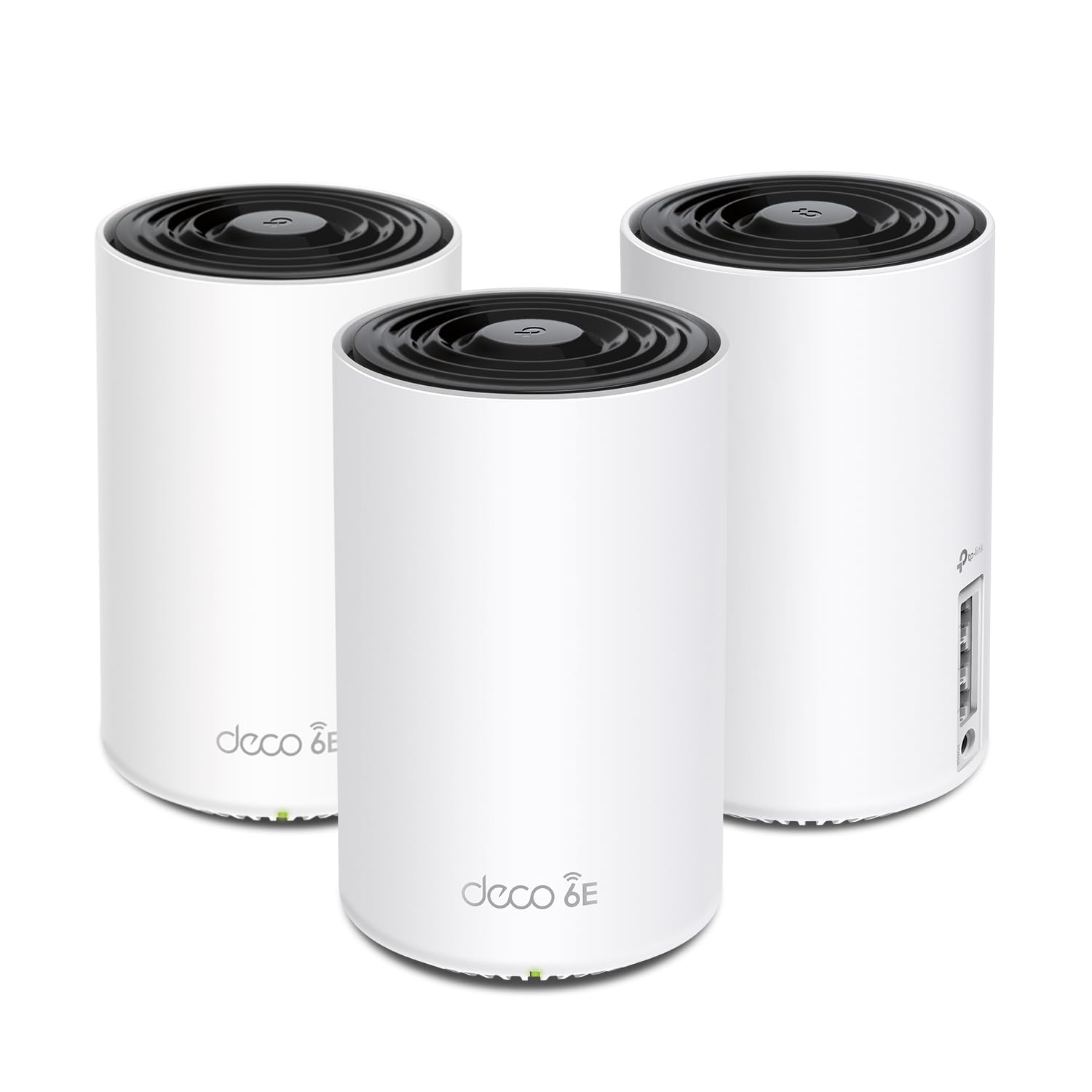
Read Amazon ReviewsTP-Link Deco XE75 AXE5400
Consider the XE75 if you prefer three mesh units and its stated coverage, or want a Wi-Fi 6E system with a configurable 6 GHz band.
Choose the Deco 7 Pro if Wi-Fi 7 and its specified 10G and 2.5G port mix better fit your devices and wired setup.
- The Deco XE75 is a three-pack Wi-Fi 6E system specified for up to 7,200 square feet and up to 5,400 Mbps total wireless speed.
- Its 6 GHz band can serve as backhaul by default or be switched to a Wi-Fi network for compatible clients.
- The Deco 7 Pro BE63 offers tri-band Wi-Fi 7, up to 5,800 square feet of stated two-pack coverage, a 10G port, and four 2.5G ports.
Whole Home & Mesh Wi-Fi Systems alternative
800+ ratings
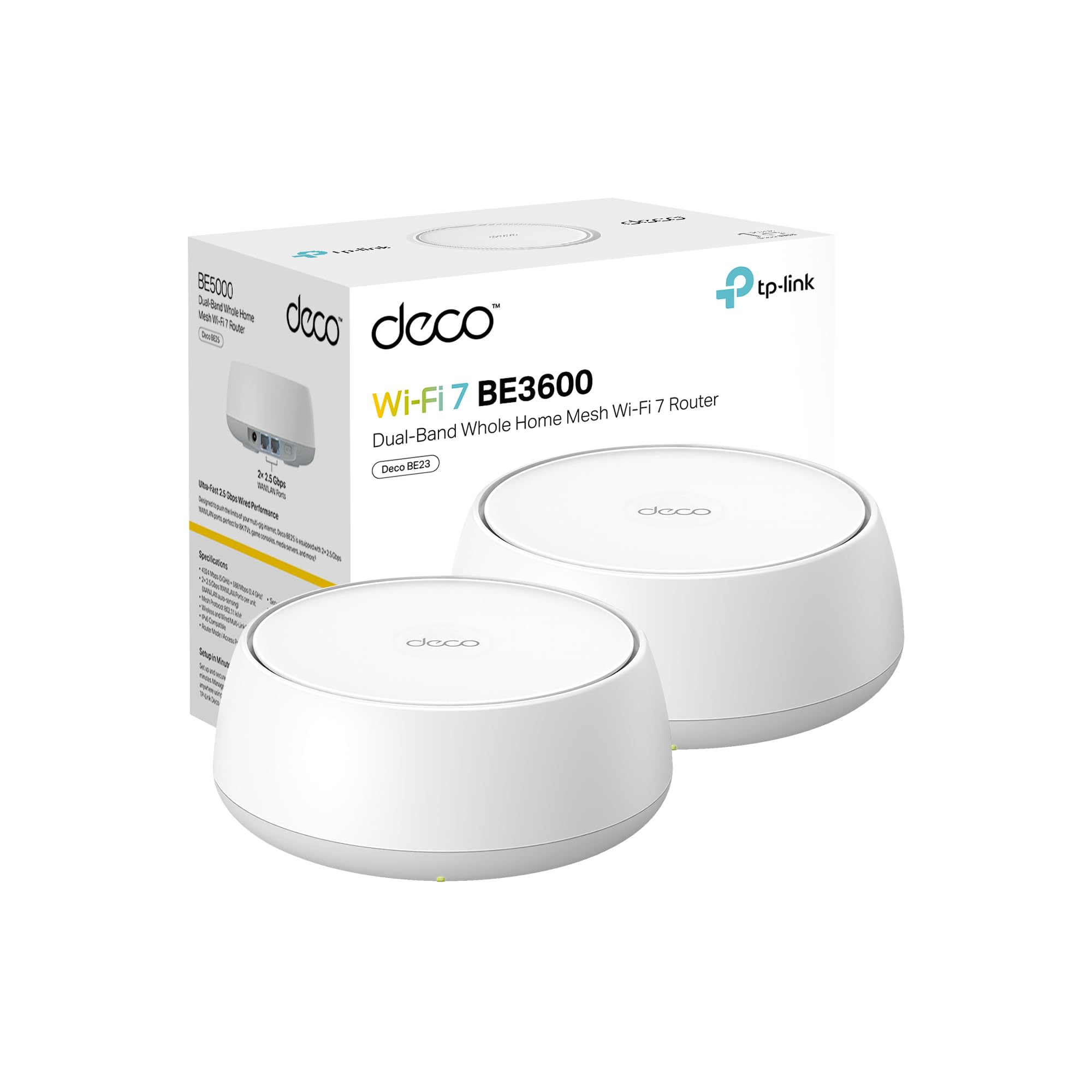
Read Amazon ReviewsTP-Link Deco 7 BE23
The BE23 may suit a smaller coverage target or a setup that needs fewer wired ports while retaining Wi-Fi 7 and two mesh units.
The Deco 7 Pro is the closer fit when you want tri-band operation, its higher stated coverage, and more multi-gig port options.
- The Deco 7 BE23 is a two-pack, dual-band Wi-Fi 7 system specified for coverage up to 4,500 square feet and support for 150 devices.
- Each unit has two 2.5G WAN/LAN ports, and the system supports wired and wireless backhaul.
- The Deco 7 Pro BE63 is tri-band Wi-Fi 7 and includes a 10G WAN/LAN port and four 2.5G WAN/LAN ports.
Is Deco 7 Pro Worth It?
The TP-Link Deco 7 Pro BE63 is worth considering for a larger, device-dense home that can use tri-band Wi-Fi 7, broad mesh coverage, and multiple multi-gig wired connections.
Its combination of 10G and 2.5G ports is a notable practical advantage for homes with compatible networking equipment.
Before buying, check your Wi-Fi clients, modem, internet plan, wired-device needs, and likely node placement.
If those align with the system’s capabilities, it offers substantial room to build out a home network; if not, a less capable setup may be a better match.
Your review at a glance
600+ ratings
Read Amazon ReviewsTP-Link Deco 7 Pro BE63
A two-unit Wi-Fi 7 mesh system for larger homes, multi-gig wired setups, and households with many connected devices.
- Two-unit tri-band Wi-Fi 7 mesh system with combined BE10000 class branding.
- Listed maximum wireless rates are up to 5,188 Mbps on 6 GHz, 4,324 Mbps on 5 GHz, and 574 Mbps on 2.4 GHz.
- Coverage is specified at up to 5,800 square feet for the two-pack, with support for more than 200 devices.
- Four 2.5G WAN/LAN ports and one 10G WAN/LAN port, plus USB 3.0.